Stellar Cyber · 2026 · Coded prototype

Made every analyst override teach the AI SOC.
  • AI SOC
  • Human in the loop
  • MSSP, multi-tenant
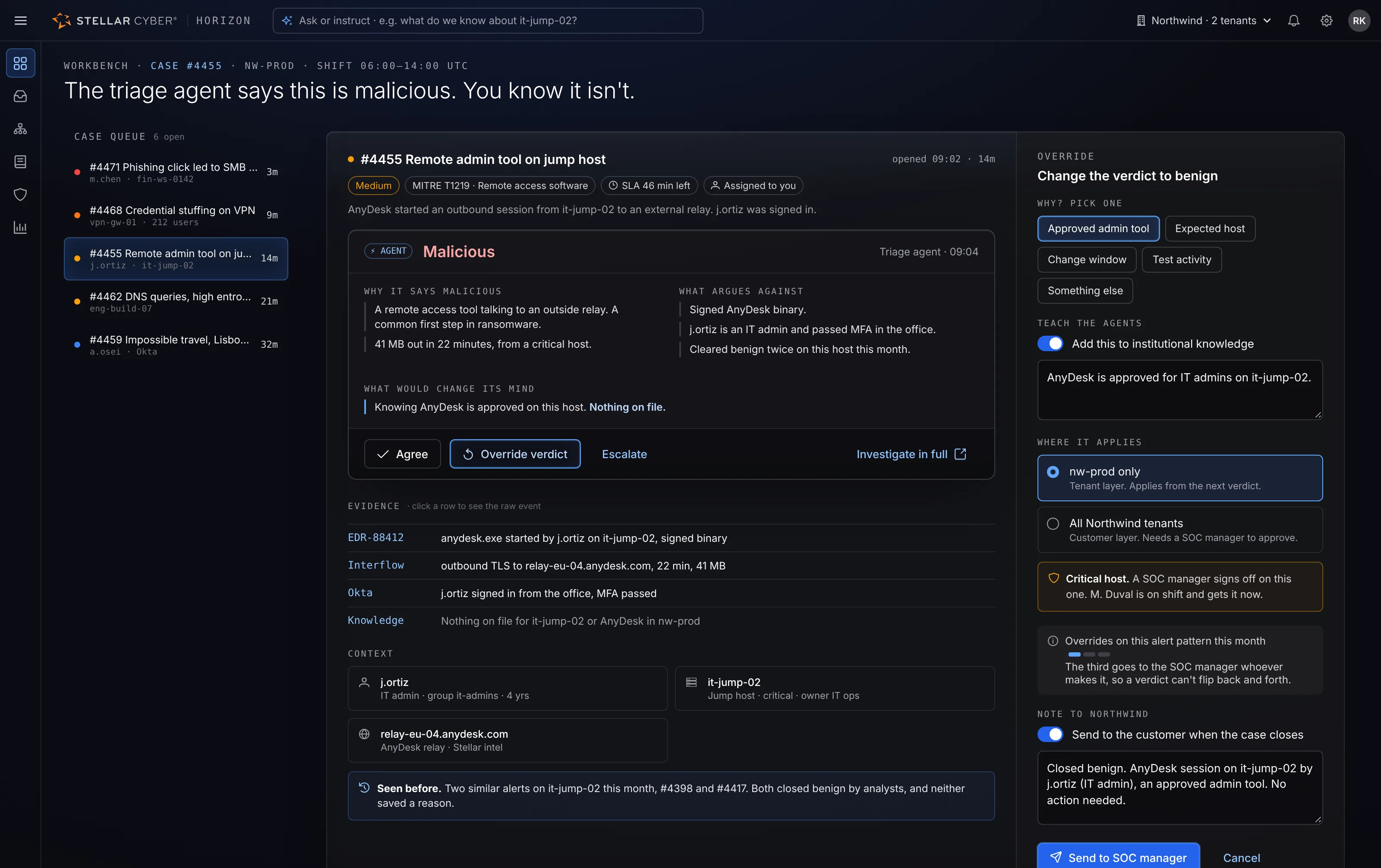
Run the prototypeHorizon workbench, case 4455: the triage agent calls a remote admin tool on a jump host malicious. The override panel offers quick reasons, a toggle to add it to institutional knowledge, a choice of tenant or customer scope, and a sign-off check: the host is critical, so the button reads Send to SOC manager. A separate note says a third override on the same pattern also goes to the manager.
Override. A quick reason, a toggle to teach the agents, a choice of where it applies, and who signs it off.

Problem

Stellar's AI gave every alert a verdict. When an analyst overrode one, the reason went nowhere, and the next alert got the same wrong call. A customer asked us outright to fix it.

Process

As design lead, I mapped what happened to an override today: nothing. I worked the flows through with the customer who raised it, then built the whole loop as a coded prototype so we could walk real cases, not static screens. The narrow ask, a feedback button, became one living source of truth per customer.

How we measured it

The first bar was the customer who asked signing off the flows, which they did, and the design went to engineering. The measure we set for live is repeat overrides: how often analysts correct the same pattern twice. If the knowledge works, that number falls.

Key decision

Treat an override as knowledge, not a complaint.

Trade-off: speed over detail

A long, required reason form gets skipped or filled with junk by analysts working a queue. So the reason is one tap from a short list, with an optional note. We gave up some detail to get reasons at all.

Trade-off: reach over safety

One override can teach every tenant, which is also how one bad override spreads. So the analyst picks where it applies, and every fact is checked before it goes live. Clearance decides who signs it off: a junior analyst on a critical host, or anyone widening it to every tenant, sends it to the SOC manager for instant approval. Separately, a third override on the same pattern goes to the manager, so a verdict can't flip back and forth.
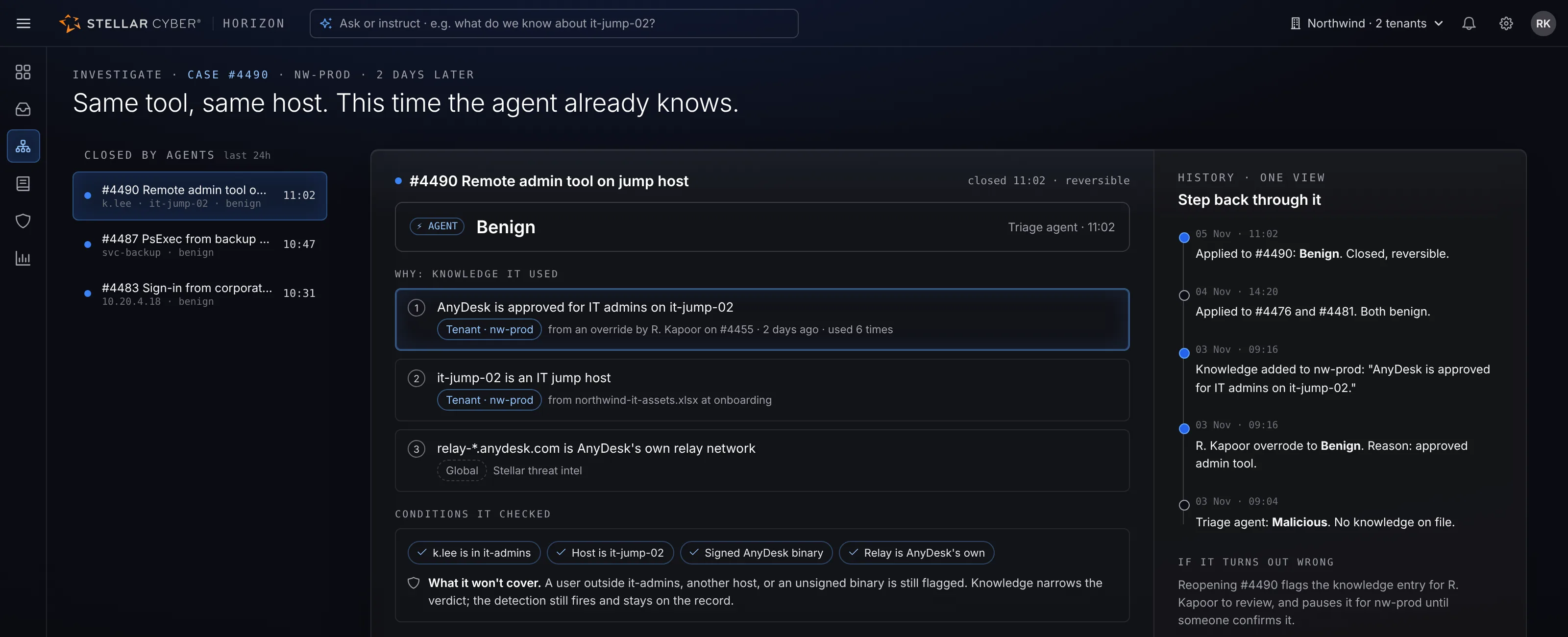
Case 4490, two days later: the same tool on the same host is now benign. The verdict lists the knowledge it used, each labelled tenant or global with its source, and a timeline lets you step back through every change.
Next verdict. Same tool, same host. The agent shows the knowledge it used and where each piece came from.
1 → alla correction one analyst makes, reused by every analyst and agent on that customer
1living source of truth per customer, read by analysts and AI agents
3knowledge layers, global, customer and tenant, always labelled
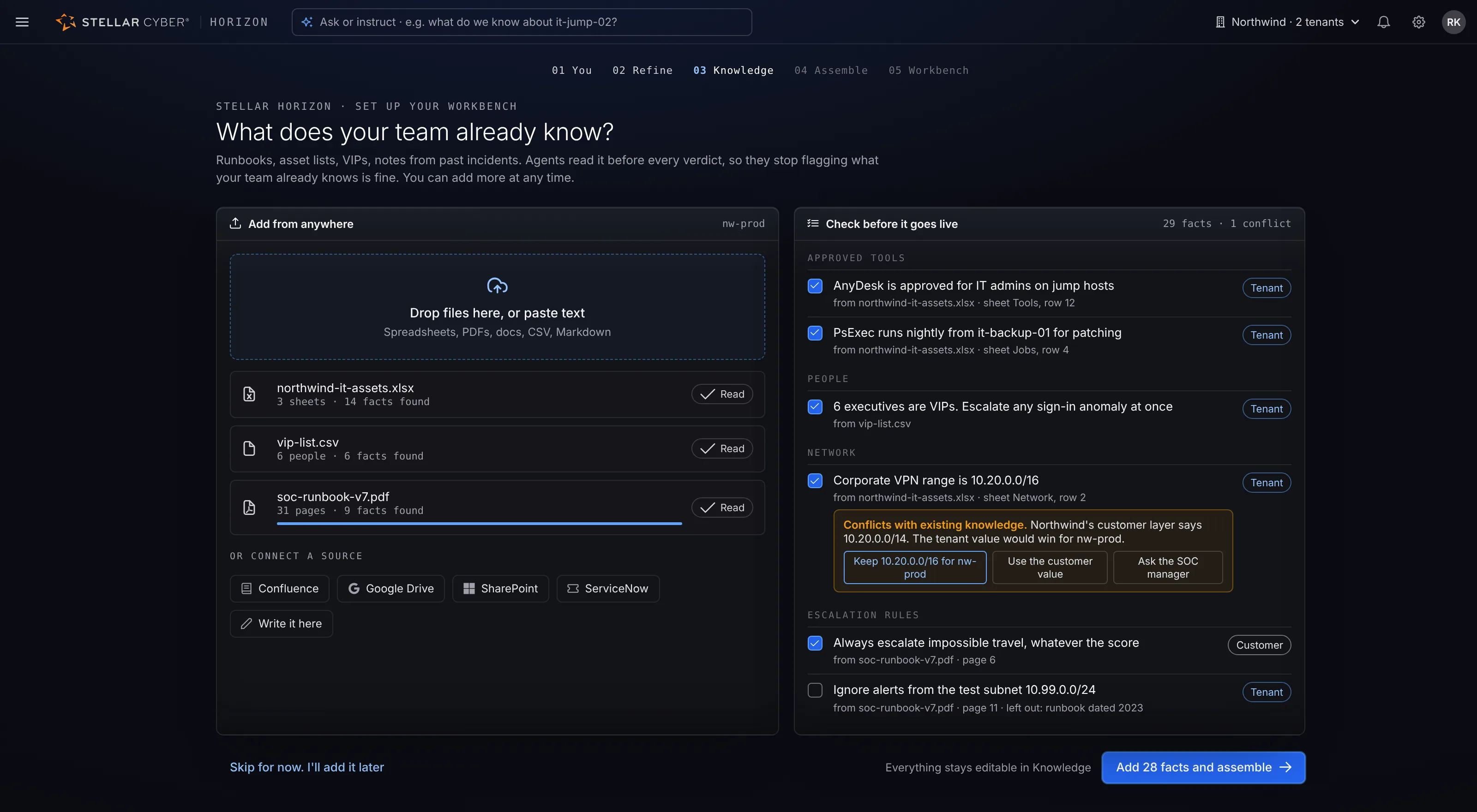
Workbench setup, step 3 Knowledge: 'What does your team already know?' Files dropped from anywhere (an asset spreadsheet, a VIP list, a runbook PDF) or connected from Confluence, Drive, SharePoint or ServiceNow. Each extracted fact is checked before it goes live, with a conflict against the customer layer flagged.
Onboarding. One extra question when you set up: what does your team already know? Every fact is checked before it goes live.
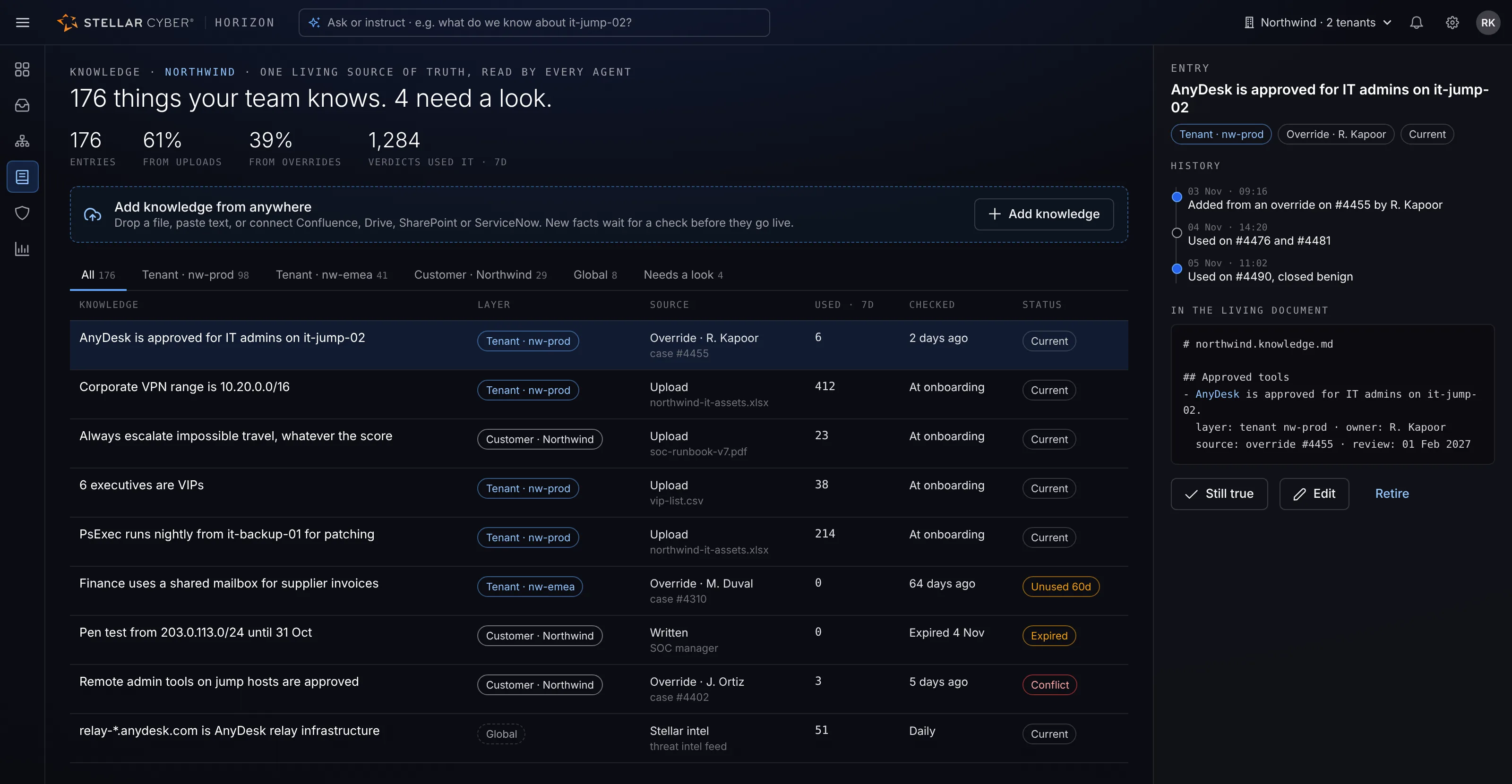
Knowledge hub for Northwind: 176 entries, filterable by tenant, customer and global layer, each with its source, how often verdicts used it, when it was last checked and whether it is current, unused, expired or in conflict. The side panel shows an entry's history and its line in the living document.
Knowledge. One living source of truth per customer. Every entry labelled by layer, sourced, and flagged when it goes stale.
The knowledge lifecycleKnowledge comes in two ways: an analyst overriding a verdict, or a customer uploading context in bulk. Both land in one living body of institutional knowledge. The AI applies it to the next verdict and shows what it used. Over time it is kept current, and every change is documented. Every new verdict can prompt a new override, so the loop keeps learning.Capturean analyst overridesIngesta customer uploadsInstitutional knowledgeone living source of truthApplythe verdict shows what it usedKeep it currentevery change documentedover timeupdate or retirenext verdict, next override
How knowledge moves through the system.